Showing posts with label rock - classic. Show all posts

Tuesday, January 19, 2016

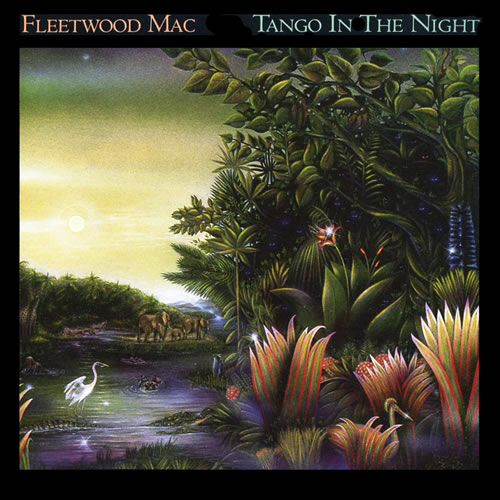
Fleetwood Mac's 'Tango in the Night' -- when will it be reissued?


Tango in the Night

Over the last decade, I've checked up on 1987's Tango in the Night recording by Fleetwood Mac, to see when it will be reissued as a remaster with extra tracks.

It's not one of the band's more popular recordings, but marked the time that I really started listening to them. It was the first recording from the Mac that I ever purchased, and I saw them live for the first time as they toured on it near the end of that same year.

No luck thus far, but in the meantime I stumbled across this post from TheSecondDisc.com. It appears I'm not the only one out there who's anticipating this release.

http://theseconddisc.com/2014/01/14/reissue-theory-fleetwood-mac-tango-in-the-night/#

Saturday, February 11, 2012

THE REVIEW CORNER: The Allman Brothers Band's first four studio recordings

Many of you born after 1970 probably never had this band on your radar, but The Allman Brothers Band is totally worth your time and money to check out -- and their first four studio albums in particular. I'm going outside of Live at the Fillmore East 1971, their classic live album....that, of course, goes without saying.

The cover of The Allman Brothers Band's self-titled debut recording from 1969
Their first four recordings go as follows: The Allman Brothers Band (1969), Idlewild South (1970), Eat a Peach (1972), and Brothers and Sisters (1973). The growth of the band over the span of these recordings is a fascinating study....with the hard blues of the first album to the explorations, instrumentals, and extended jams of each later recording.

While their eponymous debut doesn't carry a long string of hits except for "Whippin Post," there's lots of wonderful bluesy numbers on this album that are substantive, resonating, and feature some fantastic guitar from Duane Allman. Highlights include "Black Hearted Woman," "Trouble No More," and my personal favorite on the album, "Dreams," with some of Duane Allman's more experimental picking -- almost like an early effort at tapping or hammer-ons. "Whippin Post," the album's last number, is the perfect closer and hints at the band finding its true voice....a mere sign of things to come.

With the next three albums, things just keep progressing....the band solidifies its sound through each successive recording. I find the music from this band to have a very soulful and almost wistful edge to their blues explorations....tunes from Idlewild South like "Midnight Rider," the instrumental "In Memory of Elizabeth Reed," and the funk-tinged "Leave My Blues at Home" -- with some killer drumming grooves.

Eat a Peach kicks off with "Ain't Wastin Time No More," and features highlights such as "Les Brers in A Minor" (with an almost Santana-infused approach), "Melissa" and my personal favorite "Blue Sky" while Brothers and Sisters highlights "Wasted Words," "Rambin Man," "Southbound," and the popular instrumental "Jessica."

You can't go wrong with any of these recordings.....but I believe to get a full perspective of them all, and to give yourself the best possible listening experience, you need to listen to them in succession. That's where the development of the band reveals itself.

What's even more amazing -- and not necessarily evident in the recordings (unless you're a student of Duane Allman & Dickey Betts' styles and can differentiate them) -- is that the band suffered not one, but two casualties during the span of these recordings. Duane Allman, their lead guitarist, was killed in a motorcycle accident during the recording sessions to Eat a Peach, and their bass player Berry Oakley during the sessions to Brothers and Sisters -- also killed from head injuries sustained from a motorcycle accident a mere three blocks from the location of Allman's fatal accident. Spooky stuff.

Still, the music speaks for itself. Yes, I'm sure this is technically considered "Southern Rock," however that definition might be stretched....but when I listen to these boys, I just hear some killer blues by one of the all-time great jam bands. I hear more shades of The Paul Butterfield Blues Band, The Grateful Dead, The Band, and Santana before I hear anything "southern."

The CD version to their first four studio albums are available at Amazon for around five bucks apiece, with the exception of Eat a Peach, which is a double album featuring selected live cuts from the Fillmore East recording....you should be able to get outfitted with all four works for under $30.

Friday, October 3, 2008

FROM THE VAULT -- Tom Petty's amusing side

To play the song, pause the music in the left column and press play on the music gadget below.

As I was putting together an online playlist sometime back, I bumped into this song by Tome Petty called "Girl on LSD." I'd never heard of it before, and I've been a fan of this guy for decades.

Some brief research reveals that this song appeared as a B-side to his single for "You Don't Know How it Feels." Long out of print for over 10 years, this rare CD single (shown above) appears on 1994's Wildflowers...however "Girl on LSD" can't be found anywhere else...
here's more on it.


Saturday, June 21, 2008

THE REVIEW CORNER -- Grateful Dead: Fillmore West 1969 (The Complete Recordings - 10 CD boxed set)

This is one of those boxed sets that's the rarest of finds. It's probably the most coveted collectible out there in the Dead camp.
Since I can't consider myself a big Dead fan (and therefore certainly not a Deadhead, nor even close), the bulk of this review is to be handed over to someone much more qualified than myself to give the review this release deserves.
I can, however, say that I've seen the Dead live. I caught the band in their last year, in 1994, as Jerry Garcia died one year later. I saw the subculture of the Deadheads, and all the shtick that goes along with it, in its total glory. What an experience it was.
I own about a dozen Dead recordings, the majority of them live, however I haven't completely dove into their catalog. I had plenty of exposure to them in college, as lots of guys I know were really into them; but at the time it was more of the hip thing to do, and I wasn't really into "being hip" with my music - let alone with anything - as I've always preferred the more unpredictable route. So recognizing this pseudo-hippie Deadhead trend amongst my peers back in the day, I decided that I would approach the Dead on my own terms at a later time.
As a musical connoisseur, I keep evolving into new and different things all the time. That being said; with time I see myself getting deeper into the Dead, and perhaps they'll end up as one of my favorite bands in the long run as I discover more and more. I'm actually quite surprised I haven't gone through a bona-fide "Dead phase," in true and deep earnest.
I know enough about the Grateful Dead to understand there's a treasure trove of material to be discovered from this iconic band. Some great discoveries lie ahead, including noodling through the recording highlighted in this review; which by all accounts appears to be the Taj Mahal of all Dead recordings.

Grateful Dead
The Complete Recordings Fillmore West 1969
Grateful Dead Prod 10-CD
Rhino 3-CD
2005


When the Grateful Dead originally released their live album Europe 72, it was issued in a three-lp set on vinyl for dual reasons. One was to accommodate the breadth of one of their concerts, the other to fulfill their contractual obligations with Warner Bros in one fell swoop and allow the group to go independent of the corporate record biz.
Had the Dead not been in such dire financial straits at the time of the 1969 release of Live /Dead, it too might have been expanded beyond its double LP size for musical reasons alone. Regardless, the title quickly became and remains one of the definitive live releases in rock as well as wearing extremely well in the face of the multitude of Grateful Dead archival concert pieces released in the thirty-year plus interim.
Now, however, two sets of cds from the same Fillmore West 1969 appearances effectively render Live /Dead obsolete. Most of the three-disc compilation (culled from the 10-cd package) appeared on that earlier album, but if you listen to the entire two sets as now constituted, the flow of the show contains nary a wasted note or beat. Reading long-time Dead publicist and historian Dennis McNally's liner notes, it's not surprising to learn how carefully the band was choreographing this string of concerts on their home turf.
Perhaps not quite the laissez faire hippies of the stereotype, the Dead wanted the optimum conditions for these shows, having spent months preparing and rehearsing the material, original (�Cosmic Charlie, "Mountains of the Moon") and traditional ("Morning Dew, We Bid You Goodnight," the two of which bookend this collection). In addition, through its sound man Owsley Stanley, the group had become ultra-conscious of sound quality for their live music and with a sixteen-track recorder (one of the first available) at their disposal, the stars seemed to be aligned in their favor.
Archivist David Lemieux and engineer Jeffrey Norman have the luxury of hindsight plus the resources of the entire run to create. in the Rhino package, what is arguably the definitive Grateful Dead concert recording. As the band, including two drummers plus Tom Constanten on keyboards, moves from the rootsy likes of "Good Morning Little School Girl," sung, of course, by the inimitable Pigpen, and the reworked folk tune "Dupree's Diamond Blues," into the deeper space of "Dark Star,"� "St Stephen"� and "The Eleven” (those three tunes orchestrated as a massive suite), the sequencing appears utterly logical and complete.
What distinguishes Fillmore West, however, and differentiates it profoundly from Live/ Dead, is the performance included on the third cd of the compilation. While such deliberate deconstruction of their music, including "That's it for the Other One"� "�Alligator" and "Caution Do Not Stop on Tracks"� may leave some listeners cold (even Deadheads who prefer the tighter structure of songs the likes of which the band was just beginning to write at this point), it is nevertheless fascinating to follow the probing for new themes: the expeditions most often led by Garcia, bassist Phil Lesh is never far behind and often in the foreground, but drummers Bill Kreutzmann and Mickey Hart, even apart from their own drum interlude, offer ideas all around. The Dead's interaction here is not altogether unlike a ballet.
The experience of hearing this is akin to sitting on the floor of the stage in the middle of the band as they played. The HCDC remastering offers so much clarity and dynamic depth that, for instance, not only are all of Lesh’s bass notes audible, but also contain an almost tactile clarity. The same is true of the drums and percussion of Kreutzmann and Hart, the lightest touch of which come through with proportionate presence.
Grateful Dead aficionados as well as dilettantes have equal odds for epiphany working their way through all the sets from this entire four-night run at the fabled rock venue. The band’s grasp of dynamics isn’t applied just to the jams, as demonstrated by the flow of 2/27’s “Good Morning Little Schoolgirl�: their performance here suggests the band learned much about dynamics playing the blues following Pigpen’s lead, as Jerry Garcia’s howling lead guitar drops out in the blink of any eye to allow the whispering reentry of the vocal and the equally soft sound of the harp.
“Doin’ that Rag� is one of the guitarist’s earliest songwriting collaborations with Robert Hunter, whose philosophy of positivism, as it evolved over the years, is noteworthy even at this stage. The Dead find the tune equally useful as a warm-up exercise on the first night and the precursor of a cool-down toward the end of the first sets on 2/28 and 3/1. In later years, any number of songs served the same purpose, but while the Dead’s repertoire was perhaps never so constricted as these nights at the Fillmore, their improvisational approach expanded in proportion to the shrinking of the number of selections.
The aforementioned suite of songs including “Dark Star,” â€�St. Stephen” and “The Elevenâ€� is a listening experience in itself: the swirl of sound in the former tune is the sonic equivalent of what light shows of the time were attempting to portray visually. and it’s a small but profound pleasure to hear the seamless segue of the middle tune, with its wash of gong, without the abrupt edit as contained on Live/Dead.
But this box set does further justice to the Dead’s eye for detail as it exhibits how their other compositions set up this triad of well-known material. The ominous undertow of “Dupree’s Diamond Blues� is deepened by the eerie organ tones of Constanten, especially as it alternates with the comparatively lighter texture of acoustic guitar on “Mountains of the Moon,� the imagery of which carries its own foreboding rooted in the name of this band:�…hi-ho the carrion crow…�


“Fillmore West 1969 offers tremendous insight into the evolution of a great band and the art of musical improvisation in general.”

While the ten-disc collection is not assembled in book form like the three-disc distillation, its formatting in separate digi-paks for each evening lends itself to inspection of the consecutive night’s set lists. And how differently the Grateful Dead approach each night! The second evening’s first set, in contrast to the previous show, finds the Dead as a dance band pure and simple, with Pigpen upfront throughout, clearly hearkening back to the group’s earliest days in 1965 and 1966. This choice may then, in turn, explain why the band alters its entry into “The Other One,’ and, by extension, into the suite: the Grateful Dead glide as if in free fall as the flavor Garcia’s guitar is nothing but the blues, while its structure is nothing like it whatsoever.
A member of the San Francisco band for a comparatively brief period of time, keyboardist Constanten’s contribution is most notable for the way his organ bubbles under the action of the two guitarists, the fluid played off against the staccato. But his keyboards also bring out the Elizabethan sounds in songs such as the bridge of “St. Stephen� where Kreutzmann and Hart actually have their best moments as a team, navigating the turbulence just before the music morphs in “The Eleven’ on 2/28.
There is definite progression apparent on Fillmore West 1969 The Complete Recordings from one night to the next. The band becomes increasingly comfortable as the run goes on, allowing themselves to stretch out in ways it couldn’t or wouldn’t the first night. It’s worth pondering how much early equipment issues affected the group mindset, but a few bum notes and all, this is generally magnificent stuff, the likes of which shakes the ass and the intellect equally roundly. The Grateful Dead charge to a close on a wave of feedback, “We Bid You Goodnight� marred by a hum that detracts form the quietude of lullaby it’s supposed to present (and does on the final night of March 2nd).
The first of March find the Grateful Dead radiating an authority and confidence that states they know they’re on the right track. Validating Dennis McNally’s perception of this show as the pinnacle of the Fillmore run, the band proceeds with equal amounts purpose and focus, all captured on just two compact discs, suggesting comparative brevity can translate into breadth. After an earthy start that suggests the group is primed for adventure, the Dead display a surety of touch through “Starâ€�/”Stephen”/â€�Eleven,â€� the hours Jerry Garcia spent practicing banjo in the bluegrass mode manifesting themselves in the various progressions and transitions contained here, his eloquence matched phrase for phrase by Phil Lesh.
The plethora of photos contained in the booklet accompanying Fillmore West includes some stage shots from other performances in 1969, but the most notable of all are those that picture Lesh and Garcia juxtaposed on stage, rhythm guitarist Bob Weir not in between them literally (or figuratively as happened later on during the Dead’s career). Especially on the final night, the interplay between the two musicians’ takes on a heightened intensity the likes of which is rare in the Dead history, if only because the bassist is as prominent a figure in the sound as the lead guitarist. In hindsight, this dynamic presages Lesh’s modern day preeminence as the standard-bearer of the kind of exploratory musicianship epitomized by the Dead at their best throughout their career and captured on this set.
The California rock-icons-to-be are absolutely ebullient on the final night, which no doubt accounts for an even more fearless approach that generates generous stretching out at the beginning and the end of the set. With no worries about equipment and by this time bearing an instinctive familiarity with the material, the group radiates a ‘mission accomplished’ air that in and of itself retools their accomplishments as they envisioned them when this all started thee nights before. With due affection, the group sucker punches the audience with “Doin’ That Rag,� before embarking on an expedition into space via “The Other One,� that leads all in attendance even further afield via a drum interlude and a free-form improvisation the likes of which appeared only once before (and oddly enough, very rarely throughout the Grateful Dead’s history).
As much as the group was in the moment as they played during their stay at the Fillmore, they were also anticipating the future. Garcia’s sweet upper-register runs foreshadow his short-lived love affair with the pedal steel that began later in 1969. The guitarist repeatedly quotes the main melodic motif of “Goin’ Down the Road Feelin’ Bad� in the latter stages of the set on disc three, a precursor of what came to be one of Grateful Dead’s greatest show-closers and crowd-pleasers as their career evolved.
McNally alludes to Miles Davis’ Plugged Nickel and John Coltrane’s Vanguard sets in discussing Fillmore West The Complete Recordings and it’s not an inaccurate comparison.The good ol’ Grateful Dead may not hold much attraction for jazz purists, and it’s evenarguable if this grand release will tempt anyone other than completists (though its limited 10,000 piece run sold out months before it was shipped).
But as with Phish’s Island Tour and various Allman Brothers’ concert recordings (archive and recent vintage), to delve into these recordings is to avail yourself ofsome potentially great insight into the art of musical improvisation. Generally speaking, and specifically in reference to the Dead @ Fillmore West 1969 , casting aside the red herrings of preconception may be the biggest favor truly open- minded listeners can offer themselves.
Visit Grateful Dead on the web

Tracks:10 Disc set

Disc One 2/27/69 1 Good Morning Little Schoolgirl 2 Doin' That Rag 3 That’s It for The Other One - Cryptical Envelopment -The Other One -Cryptical Envelopment Disc Two 1 Dupree's Diamond Blues 2 Mountains Of The Moon 3 Dark Star > 4 St. Stephen > 5 The Eleven > 6 Turn On Your Lovelight 7 Cosmic Charlie
Disc Three 2/28/69 1 Morning Dew 2 Good Morning Little Schoolgirl 3 Don’ That rag 4 I’m A King Bee 5 Turn on Your Lovelight
Disc Four 1 That’s It for The Other One - Cryptical Envelopment -The Other One -Cryptical Envelopment 2 Dark Star > 3 St. Stephen > 4 The Eleven > 5 Death Don’t Have No Mercy
Disc Five 1 Alligator> 2 Drums> 3 Jam > 4 Caution (Do Not Stop On Tracks) > 5 Feedback > 6 We Bid You Goodnight
Disc Six 3/1/69 1 That's It For The Other One -Cryptical Envelopment -The Other One -Cryptical Envelopment 2 New Potato Caboose > 3 Doin’ That Rag > 4 Cosmic Charlie >
Disc Seven 1 Dupree’s Diamond Blues 2 Mountains of the Moon 3 Dark Star > 4 St. Stephen > 5 The Eleven > 6 Turn On Your Lovelight 7 Hey Jude
Disc Eight 3/2/69 1 Dark Star > 2 St. Stephen > 3 The Eleven > 4 Turn On Your Lovelight
Disc Nine 1 Doin’ that Rag 2 That's It For The Other One> - Cryptical Envelopment > -The Other One> - Cryptical Envelopment 3 Death Don’t Have No Mercy 4 Morning Dew
Disc Ten 1 Alligator> 2 Drums> 3 Jam > 4 Caution (Do Not Stop On Tracks) > 5 Feedback > 6 We Bid You Goodnight

Tracks:3 Disc set

Track listing
Disc One 1 Morning Dew 2 Good Morning Little Schoolgirl 3 Doin' That Rag 4 I'm A King Bee 5 Cosmic Charlie 6 Turn On Your Lovelight
Disc Two 1 Dupree's Diamond Blues 2 Mountains Of The Moon ) 3 Dark Star > 4 St. Stephen > 5 The Eleven > 6 Death Don't Have No Mercy
Disc Three 1 That's It For The Other One Cryptical Envelopment The Other One Cryptical Envelopment 2 Alligator > 3 Drums > 4 Jam > 5 Caution (Do Not Stop On Tracks) > 6 Feedback > 7 We Bid You Goodnight
Personnel:[ Tom Constanten: Organ; Jerry Garcia: Lead Guitar, Vocals; Mickey Hart: Drums; Bill Kreutzmann: Drums; Phil Lesh: Electric Bass, Vocals Ron “Pigpen” McKernan: Vocals, Harmonica, Percussion, Organ; Bob Weir: Rhythm Guitar, Vocals
by Doug Collette, from allaboutjazz.com

Thursday, March 20, 2008

THE REVIEW CORNER -- Remaster of U2's Joshua Tree album brings old memories & the mythical American Southwest to life

In my opinion, it was the most significant music project of the 1980s, by any rock band.

The Joshua Tree, U2's 1987 epic, just got even better when it was released last November in a remastered edition to celebrate the 20th Anniversary of its release.

You can pick it up in a single disc version, a 2-CD version with B-sides, outtakes and different versions of songs from the album sessions, or a 3 disc boxed set with the 2 CDs and a concert DVD from the tour that followed the original album release...

So there's something for everyone; just have your pick and enjoy the superb remastered sound quality! It's a big improvement, in my opinion. A HUGE improvement. Now they just need to release it in a 5.1 surround sound version, but that's another "filler for audiophile story" for another day...

For me, this recording has a very personal leaning. I'll focus on that right now and leave the other angles on the subject matter of the album to the next guy...

The album came out during a time of my life when I was in transition; graduating from high school and experiencing the gift and freedom of going out of the Seattle area, out of state to Arizona, for my freshman year of college. The summer of 1987, when I first heard The Joshua Tree, was also a bittersweet time for me as I'd lost my maternal grandmother the day after graduation. The music, with its southwestern themes, beckoned me and enhanced the possibilities that lay ahead as I got ready for the day I would fly to Phoenix to start a new chapter in my life.

The Joshua Tree helped provide a soundtrack for my introduction to Arizona and the American southwest as I began my first year of college at Arizona State. For me, the imagery of The Joshua Tree is the beautiful desertscapes of Arizona and the drive through the desert along Interstate-10 as you go west toward Los Angeles. I've lost count of the number of times I've spun the disc on that drive... it's a required listen on that stretch of I-10, and you can usually fit it in during the near-7 hour trip.

It brings back that summer after high school and my first year of college... the transitions that took place, and the people that affected me at the time. It's part of the soundtrack of my life.

If you're headed west on I-10, try to throw it on when you cross the state line into Arizona and the saguaros of the Sonoran Desert start coming into view... it will send shivers up your spine.

So those are my thoughts... here's an excerpt from the disc booklet that's of interest. S


The Joshua Tree made U2 into international rock stars and established both a standard they would always have to live up to and an image they would forever try to live down.

Both things have been very good for the band. With The Joshua Tree U2 reached the top of the mountain.

Some artists get to the top of the mountain and come back down. Some fight to stay there. U2 got to the top of the mountain and used it as a place to build a launching pad.

U2 were barely out of their teens when they released their first album, Boy, in 1980. October followed the next year and then War, with its fist-in-the-air anthems, alerted the guard dogs of the rock world - radio, press, and retail - that a big new act was blooming.

Bono has pointed out that U2 benefited here from the coincidence that most of the other bands who were ahead of them in the punk /new wave queue - The Clash, Talking Heads, Police, Pretenders - chose this moment to take a powder. An audience for new rock music had been building for more than five years and suddenly U2 were at the front of the line. They grabbed that energy and used it for rocket fuel.

But first they took a step sideways. The Unforgettable Fire (1984) was not the anthemic stadium rock monster that the group's label - and perhaps a lot of their fans - had expected and hoped for. Rather than go in and make a Who /Led Zeppelin record, U2 chose to work with the conceptualist producer Brian Eno and his confederate, multi-instrumentalist Daniel Lanios to do something more subdued and experimental.

It turned out to be a smart move - it deepened U2's relationship with their audience before the big step forward and served notice that this was a band with ambitions beyond record sales. Unforgettable Fire was a bigger hit than U2 had enjoyed to date - the group's momentum was unstopped - and it contained their first big hit single, "Pride (In the Name of Love)."

"Pride" - a rousing celebration of the vision of Martin Luther King - was slightly out of place on The Unforgettable Fire, but it provided a blueprint for the broad-shouldered, big screen American visions of The Joshua Tree.

U2 had spent a tremendous amount of time in the USA in the first half of the eighties. What they saw through bus windows and in the gas stations, motels and theaters along the way shaped the new music they wrote. Bono and Edge were influenced by the wasteland western plays of Sam Shepard as well as the European lost-in-America imagery of films like Wim Wenders' Paris, Texas.

What came out were songs that dealt less with America the country than with a mythic America of the imagination. In that way, U2 were following in the footsteps of their fellow Irishman Sean Feeny - who as John Ford made films like Fort Apache, The Searchers, and The Man Who Shot Liberty Valance, that turned the desert vistas of the southwest into a landscape for stories about temptation, redemption, and the power of myth to ennoble or destroy.

The hit singles from The Joshua Tree - "Where the Streets Have No Name," "I Still Haven't Found What I'm Looking For," and "With or Without You" all have titles that sound like lines John Wayne would say in a John Ford film. They suggest a quest, a journey out into the territories...and yet the heart of the album is two songs that were not hit singles, but which have endured over twenty years as the centerpiece of countless U2 concerts - "Running to Stand Still" and "Bullet the Blue Sky." One is a whisper, the other an explosion and together they demonstrated how deep U2 were prepared to go.

"Running to Stand Still" was inspired by an epidemic of heroin use in Dublin. The story in the song is of a couple who decide to risk everything on a big drug deal. They pretty much know going in that they don't have a chance of coming out. "Bullet the Blue Sky" is about the American-backed insurgency that was at that time trying to overthrow the leftist government of El Salvador. Bono and his wife Ali got caught on the edge of a firefight during a visit to Central America, and he came back with the idea for that song - an indictment of U.S. power turned against its neighbors. Famously, Bono asked Edge to put the war through his amplifier.

What makes those songs stand up twenty years later is that you don't need to know any of that history. "Running to Stand Still" is for anyone who feels trapped in an impossible circumstance by overwhelming responsibility. "Bullet the Blue Sky" is as true in Iraq as it has been in Bosnia, Chechnya, Rwanda or Darfur since the music was first played.

Produced by Eno and Lanois (with some umpiring by U2's original producer, Steve Lillywhite), The Joshua Tree sold more than twenty million copies, won the Album of the Year Grammy, went to number one around the world, and put U2 on the cover of Time magazine - but it did a lot more than that.

The Joshua Tree put U2 into a pantheon that very few bands of their generation ever reached and that no other band of their generation stayed in. It put U2 on the mountain with The Stones, The Who, Hendrix, Springsteen and Zeppelin. It put them on top of the world.

It is to U2's great credit that when they got to the top of that mountain, they refused to be set in stone. They wanted to see some other views. So after the victory lap that was Rattle and Hum, they headed for the new horizons of Achtung Baby and Zooropa. Asked what the sound of their new record would be in 1992, they famously said, "It's the sound of four men chopping down The Joshua Tree."

by Bill Flanagan, 2007
Tuesday, December 11, 2007

The Zeppelin reunion concert... at last!!!

So it finally happened... waaaaay overdue...

Led Zeppelin, one of the greatest rock acts of all time, and arguably the most influential rock band of all time next to the Beatles, finally gave their hungry fans what they'd been waiting for years to see... no, it's more like
decades... a bona-fide live concert that showcased material from all their albums.

It took place yesterday in London, at the O2... with Jason Bonham, the son of the late John Bonham, on drums.

The Zep didn't put out a
single poor album, and they never had a bad song... not one... so they could seemingly whip out ANYTHING and play it live... well, not just "anything," if we want to avoid some scary visuals of seldom-seen cragginess... now we're getting really icky!

So here's their set list from last night:
  1. Good Times Bad Times
  2. Ramble On
  3. Black Dog
  4. In My Time of Dying
  5. For Your Life
  6. Trampled Underfoot
  7. Nobody's Fault but Mine
  8. No Quarter
  9. Since I've Been Loving You
  10. Dazed and Confused
  11. Stairway to Heaven
  12. The Song Remains the Same
  13. Misty Mountain Hop
  14. Kashmir
Encore
  1. Whole Lotta Love
  2. Rock and Roll
Very cool... but nothing from In Through the Out Door, huh? I would have liked to have seen them play "Achilles Last Stand" from Presence, or maybe something random from Physical Graffiti, such as "In the Light," "Down by the Seaside," or "The Wanton Song."

If they decide to tour, perhaps they'll consider touring without an opening act, which would free them up to expand the set list and bring in some more obscure numbers... or maybe they'll let the audience call out songs and design the set list themselves... right? Isn't that how it's supposed to work?

Let's hope they follow up on this and tour the States... What a dream that would be! S

Wednesday, November 21, 2007

THE REVIEW CORNER -- Chrome, Smoke & BBQ: The ZZ Top Box. 2003 issue, Warner Brothers.

This was a boxed set I'd been eying for a few years now, and I finally picked it up today with some birthday cash.

I even found the limited edition box (designed to mock a Texas roadhouse shack), as you can see here... very cool, corrugated iron Tejas style, with a "menu" booklet inside and little figures of the band you can cut out to create a sort of mini-model scene on your work desktop... it conjures up a memory of models on my old HO train track set, where I built urban landscapes around the train track -- just to wipe everything out with a train calamity... you know, boy stuff.


So now I can harken back to my childhood and pair my ZZ Top action figures with my old eagle-eye G.I. Joe... there's even a little cactus and picnic bench included with the figures, for some real life ZZ Top scenarios. Great, it's so good that I now know how these guys live their day to day lives... that's soooooo important...

Then there's a flipbook showing the band twirling their guitars and doing that thing with their hands, like they did in the video of "Legs" back in the day... you know, the one with the flashy red car, remember?

Oh, and there's music in the box set too, I almost forgot. 4 CDs spanning the band's time with Warner Brothers...

However, I must admit that I did pick up the roadhouse shack box set partially with a purpose in mind---in that being the alphabetizing freak that I am, I can now place this nicely on the far right side of my alphabetized box sets on the shelf as a sort of "ZZ Top bookend." So I'm a happy camper... if there's room on the shelf I may even set up the action figures, along with my Rush and Dwight Schrute bobbleheads---a sort of "trio-off" if you will...

Anyhow...

For those who know ZZ Top through their 70s pre-long beard period, or through MTV and the flashy red car videos of the 1980s, this box will cover the whole spectrum for you and showcases the growth of this bluesy Texas trio.


Here's a review of the box set from the All-Music Guide. Since I hit a bit of a wall, not being very familiar with their early material, I'll let them take it from here.
S


Prior to 2003's Chrome, Smoke & BBQ, ZZ Top's catalog was crying out for a comprehensive retrospective.

Not that the band hadn't been anthologized before: they had two hits collections, with notably different track listings, and in 1987's
Six Pack, they even had a makeshift box set, but all three of these were hampered by limited focus and haphazard execution.

Chrome, Smoke & BBQ addresses both of these concerns by focusing on the trio's 20 years at Warner -- from 1970's ZZ Top's First
Album to 1990's Recycler -- picking the best 70 or so songs from these ten albums and spreading them over the course of a lavish four-disc, 80-track box set.

This is the first logical approach to ZZ Top's career yet, and while it isn't a perfect collection, it comes tantalizingly close to that ideal. The primary problem is that by the time the fourth disc rolls around, the collection has lost considerable momentum -- and that's without even touching any material from the forgettable albums the band waxed for RCA in the '90s.

With its robotic beats and flattened production,
Recycler pointed the way toward those RCA records, yet it did have some excellent songs -- "Give It Up," "My Head's in Mississippi," and "Doubleback" -- that harked back to the group's strengths, something that would have been more apparent if these songs appeared at the end of disc three, after the Afterburner material.

Instead, they're stranded on the fourth disc, along with four other songs from
Recycler, for a grand total of seven of ten songs from that album, to which are added six "Medium Rare" tracks -- the obligatory obscurities that are included on each box set, this time being a pretty cool Spanish version of "Francene," an OK live take on "Cheap Sunglasses" from a 1980 promo single, and four 12" remixes, none of which are very good. This disc is required listening only for diehards.

Fortunately, the other three discs are damn near perfect, containing six to seven songs from each of their albums except their debut (nearly all of those records had a mere ten tracks, making this a very generous sampling) along with three tracks from guitarist/vocalist Billy Gibbons' first band, the Moving Sidewalks, and a single, "Miller's Farm"/"Salt Lick," from the "embryonic" ZZ Top, before bassist Dusty Hill or drummer Frank Beard joined forces with Gibbons.

All the hits and classic rock radio staples are here, of course, along with a wealth of album tracks that illustrate that even if the band didn't have much range -- whether the production was raw and greasy as it was on "La Grange" or clean and sleek, like the Police playing
the Rolling Stones, as on "Pearl Necklace," they rarely strayed from either fast blues boogie or slow blues -- they did have strong songwriting chops, witnessed by such buried treasures as the raucous "Brown Sugar" and "Just Got Paid," the monster groove of "I'm Bad, I'm Nationwide," the sweet "Leila," the crawling "Blue Jean Blues," and the unspeakable sleaze of the oozing "Mexican Blackbird" and smirking "I Got the Six." All this and more (including a radio commercial for Deguello) spread out over three addictive discs that truly do condense ZZ Top's records to their very best.

It would be nice to have the good
Recycler songs sandwiched onto the third disc and top the set off at three discs -- it would have been a nice symmetry, with one disc for each band member -- but it's easy enough to ignore the last disc and revel in how good the rest of the set is. Basically, Chrome, Smoke & BBQ is all the ZZ Top you'd ever need. [Chrome, Smoke & BBQ was released in two editions, both containing a terrific book, filled with great photos -- including early shots of Gibbons in the Moving Sidewalks, without the beard -- testimonials by the likes of Billy Bob Thornton, Dwight Yoakam, Ann Richards, and of all people, David Lynch (who immortally proclaims "ZZ Top = the fast track to cool"), an excellent history by Tom Vickers, and track-by-track notes by Gibbons, Hill, and Beard, as told to Bob Merlis.

The limited edition is quite fancy in its own right, encased in a mock roadhouse shack and containing a booklet shaped as a menu, a sheet of ZZ Top paper dolls (no perforations, however; this is for display purposes only), and a flipbook that finds the trio doing their signature twirling guitars and hand gestures. It's a little elaborate, but it's fun, particularly because the four discs are in jewel cases and can be transported while this sits on the set, next to the other impractical, oversized box sets, such as that
Charley Patton box designed as a fake album of 78s, in your collection.]
~ Stephen Thomas Erlewine, All Music Guide

Sunday, October 14, 2007

THE REVIEW CORNER -- The Band: A Musical History box set is the "dark horse" cornerstone to any rock collection. 2005 issue, Capitol Records.

I recently picked up this 5 CD /1 DVD career-spanning set from the local library, and I have to say I'm definitely impressed. I plan on owning it for myself someday.

Until recently, this rock "band" was mostly a mystery to me---sorta like the shadowy figures of THE BAND depicted on the cover of this handsome box set (the hardcover "music book" that you see here to the left). Over 100 pages of stories, rare photos, and anecdotes are included along with the 6 discs nestled nicely in pages at the rear... gives it an old family photo album sort of feel.

Gracing us with perhaps the simplest name in rock history, THE BAND even predated the Beatles in an early incarnation known at The Hawks. Comprising of Canadians and Americans, the changed and final name you know them by today came from the time that they backed Dylan on his tours in the mid-60s. At that time Dylan was billed as "Dylan and the band," so afterwards the name stuck.

They didn't last long, disbanding in 1976 due to internal conflicts over songwriting credits; Robbie Robertson (lead guitarist) I guess decided to take all the credit. From what I can gather, it seems like an unfair maneuver of an egomaniac; as many of the other members were stated as having contributed to the music if not the overall songwriting process. This fact is only proven in the DVD, which shows the band at a pink house in Woodstock, New York (not the actual music festival) "woodshedding" to craft their sound. Hence, the name of their debut album, which we'll get to in a second...

Listening to their sound, one can tell that more than just Robertson contributed to it. It's one of those situations in which they were definitely greater than the sum of their parts.

...and for what it's worth, these guys are in the Rock and Roll Hall of Fame. They were one of its first inductees, going in in 1994.

These guys are very rootsy, salt-of-the-earth and unpolished---which acutally is very refreshing. They're like a can of soup, as I hear lots of elements fused together when I put these guys on. I hear a hodge-podge of the blues, rockabilly, country, folk, gospel, soul, funk, southern roots, psychadelia, a little jazz, and I even heard some ragtime piano somewhere in there. They also sport 3 singers; my personal favorite being the bass player Rick Danko, who died just before the turn of the new millennium in December 1999. I also totally dig their keyboard /organ player Garth Hudson---if you get your hands on the box set, check out "The Genetic Method" (live) on CD 4---noodling on that funky Lowrey Organ. Ohhhh yeahhh.

Check out their site The Band, or just check them out at your local library if you're curious. If you go for individual albums, the big 3 by them would be their first album Music from Big Pink (with the famous abstract album cover painted by Bob Dylan, pictured to the left), their eponymous second album The Band, and the album showcasing their final live performance in 1976, The Last Waltz (available in both 2 CD versions and a 4 CD deluxe edition set)... and of course the career-spanning box set shown at the top of this post, which makes for a handsome "music book" if you will on your shelf. All their old albums have been digitally remastered for optimal sound quality. The latter live classic has guest performances by several folks including Bob Dylan, Eric Clapton and Neil Young.

THE BAND were more popular with journalists and fellow musicians than the general public. Their talent, virtuosity, and the multi-instrumental abilities of the individual members cannot be denied.

However, unless someone had an older sibling to dial them in, it's understandable how anyone
born after the mid-1960s would fail to have this rock group on their radar. I consider myself quite a music buff, and an armchair historian to boot---and it basically took me until now to check these guys out. I'm puzzled as to why they never made much more of an impression; I'm guessing much of it had to do with their short successful run, their grassroots sound, and the fact that they're mainly resigned to the 1960 and 1970s.

You probably know the song "The Weight" from the radio---but that's about all you'll hear these days of THE BAND on the airwaves---at least in my experience... Maybe "Stage Fright," "The Night They Drove Old Dixie Down," "Don't Do it," or "Life is a Carnival"---but I can't conjure up a radio memory of those latter songs.

They're definitely a throwback. They wouldn't really appeal to a youngster growing up in the 70s as much as more in-your-face bands like Kiss, Aerosmith, or David Bowie. You have to dig a little deeper to discover these guys---plus in my opinion their name throws off many folks today and puts them in the position of getting dismissed more than they should.

When you first hear them, they may remind many of you of a Saturday Night Live house band---probably because they played in the mid-70s on the show---and I'm guessing the show modeled their house band after THE BAND, something that continues to this day (or at least they still attempt to, in a cheesier and more bastardized fashion).

That is in no way a dig to THE BAND, as they were true originals.


Anyone who likes "southern rock" should definitely take to these guys... I hear where Skynyrd got some ideas, and I hear some Phish... and newer bands like My Morning Jacket... but they're sound goes way beyond that.


Don't make the same mistake I made by dismissing them and waiting to check them out---they're worth your time. Put something by them on your holiday wish list.

I give A Musical History by The Band 4.5 out of 5 stars.
S

Thursday, October 4, 2007

Ashes to ashes all fall down - the Dead's "Throwing Stones" defines the state of our World

It's almost scary how accurate the lyrics to the Grateful Dead song "Throwing Stones" are, in terms of defining where we're at today:

Picture a bright blue ball just spinning, spinning free
Dizzy with eternity.
Paint it with a skin of sky, brush in some clouds and sea
Call it home for you and me.

A peaceful place or so it looks from space

A closer look reveals the human race.
Full of hope, full of grace, is the human face;
But afraid, we may lay our home to waste.

There's a fear down here we can't forget, hasn't got a name just yet

Always awake, always around singing ashes to ashes all fall down.

Now watch as the ball revolves and the nighttime calls

And again the hunt begins and again the bloodwind calls
By and by again, the morning sun will rise
But the darkness never goes from some mens eyes.

It strolls the sidewalks and it rolls the streets

Stalking turf, dividing up meat.
Nightmare spook, piece of heat, you and me, you and me.

Click, flashblade in ghetto night. rudies looking for a fight.

Rat cat alley roll them bones. need that cash to feed that jones
And the politicians throwing stones
Singing ashes, ashes all fall down.

Commissars and pin-striped bosses role the dice

Any way they fall guess who gets to pay the price.
Money green or proletarian gray, selling guns instead of food today.

So the kids they dance, they shake their bones

While the politicians throwing stones
Singing ashes, ashes all fall down.

Heartless powers try to tell us what to think

If the spirits sleeping, then the flesh is ink.
History's page, it is thusly carved in stone
The futures here, we are it, we are on our own.

If the game is lost then were all the same

No one left to place or take the blame.
We will leave this place an empty stone
Or this shinning ball of blue we can call our home

So the kids they dance, they shake their bones

While the politicians are throwing stones
Singing ashes, ashes all fall down.

Shipping powders back and forth

Singing black goes south while white comes north
And the whole world full of petty wars
Singing I got mine and you got yours.

And the current fashions set the pace.

Lose your step, fall out of grace.
And the radical he rant and rage, singing someone got to turn the page
And the rich man in his summer home,
Singing just leave well enough alone
But his pants are down, his covers blown
And the politicians are throwing stones
So the kids they dance they shake their bones
Cause its all too clear were on our own

Picture a bright blue ball just spinning, spinning free

Its dizzying, the possibilities. ashes, ashes all fall down.

So there it is, since it speaks for itself, I'll end it here. S

Wednesday, September 26, 2007

Gearing up for the "other Neil"

Now that the Rush chapter has come to a close for the year (and what a ride it was!!!)... well, it never really comes to a close, but I have to move onto other things to keep my mind occupied...

(drum roll please... bshshshshshshshshshshsh...) It's time to gear up for the "other Neil!" Yaayyy!!!


The "other Neil" means Neil Young, who also happens to spawn from Canada like the "primary Neil," (being Neil Peart, drummer /lyricist of Rush). In recent years both have also shared the fact that they migrated to southern California at some point of their lives. What else do they have in common... they're both lyricists, and they both have piercing stares... and they shake around alot (Neil Young's nickname being "Shakey," of course---I'm assuming due to his angular guitar poses when he's soloing and awkward sudden jolts onstage---soon to take out someone's eye, if he hasn't already)... what else... I'm sure I could draw all kinds of bizarre parallels...

So October 23 is the big day, which will be here in less than 4 weeks. It's a big event because not only will I be seeing Neil Young for the first time in concert, but his new album Chrome Dreams II is released on that same day. From what I understand, some members of the Crazy Horse band are accompanying him on this tour, so I'm expecting some electric Neil---but it would be nice to get a little acoustic Neil as well.

I just love this guy's diversity, both between projects and during live sets. How does someone get down and dirty with Crazy Horse in 1977's American Stars & Bars, then record a beautiful and sentimental acoustic album like 1978's Comes a Time, and finally slap down a masterpiece mixing both light and heavy sounds with 1979's Rust Never Sleeps? Then brings it out on stage to pull off both ends of the spectrum flawlessly? Neil Young. There's nobody like him, and the breadth of his catalog is only second to Dylan's---but in my opinion he's way more accessible than Dylan---and all due respect to you Bob, but Neil could rock you out of the house. Plus I couldn't understand a damn thing you were "singin'/sayin'" at Portland State a couple years back, which doesn't help matters either.

Neil Young is one of the hardest working artists out there, and always has
been. His career has taken more interesting and unlikely twists and turns than the North Cascades Highway; which, if you dive deep into his catalog, is one of the very appealing things about him; you have absolutely NO idea where he's going to steer the ship next. He could give you something light and polished, or he could drive it "into the ditch," as he once stated, and give you something raw and gravelly.

Neil's one of those artists who, if you venture deep into his catalog past the Decade compilation (which is actually a decent introduction), rewards you with countless lost gems. That's how I discovered Tonight's the Night, which is one from the "ditch trilogy" that I keep coming back to (along with On the Beach and Time Fades Away, the latter of which was never released on CD). I can throw that on, then bump up to 1992's Harvest Moon (a MUST own if your even a marginal N.Y. fan), then get more contemporary with his recent rallying cry Living with War.

Neil's catalog is a potpourri of tasty treats, and you really can't go wrong
anywhere---especially in the 60s, 70s and 90s---but especially in the 70s. Of recent, I really like 2000's acoustic Silver and Gold, the creativity of Greendale from '02, the sentiments of his father and upbringing in Canada on Prairie Wind from '04, and the anger and honesty of Living with War from '05.

The only part I might warn you about is his 80s material, which has some weaker albums, but that was overshadowed by extenuating circumstances involving a war between him and
Geffen records. David Geffen was basically being mean to Neil (there's really no other way to frame it, the guy's an ass) and not supporting new directions he wanted to go in, so Neil responded with an album titled Trans, which featured "Transformer Man," a rather amusing listen (morphed robotic early 80s voice and all, insanely dated). Despite that unfortunate period, he closed out the 80s with a new record deal and the album Freedom, which boasted the hit "Rockin' in the Free World." He then inspired an entire rock sub-genre, the grunge scene, which in turn inspired him. Whatever he may have lacked in the 80s he certainly made up for in the 90s.

Anyway, I could go on forever about this guy. I look forward to the new CD and to seeing the man in concert. We'll talk about him more in the near future.
S