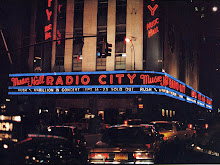
It was bound to happen eventually...and now it's here. It's musicians on toy instruments covering some of the most complex passages in the rock catalog.
Interestingly enough, it actually works in the case of the band PLASTICA.
Here's a worthy cover of Rush's "YYZ." You can find others they cover, such as Metallica's "Master of Puppets," in which they have conveniently modified the title to "Master of Pop-tarts." Enjoy, if you dare!
Showing posts with label ISSUES FOR IDIOTS. Show all posts
Showing posts with label ISSUES FOR IDIOTS. Show all posts
Monday, August 18, 2008


Friday, April 25, 2008
ISSUES FOR IDIOTS -- Artist subgenre classifications with MP3 players
 So this is an ongoing problem I seem to have...and it seems to have no end in sight.
First of all, I'd like to say that I'm generally not a fan of classifying music, as many artists defy category. I guess the fact that I listen to many artists that cross music categories I believe demonstrates how I have breadth and diversity in my music collection. That stated, my collection certainly can always use more (such as opera, classical, blues, and electronica).
As the line under the title of the blog states: "...the musical journey continues."
...but now we need you at the bridge, Captain! WE'RE HAVING ISSUES!!!
So, back to the subject of classifying artists. Those of us who have MP3 players (in my case, the 160GB iPod, of which I've filled so far with 104.90GB of music - that's 19,785 songs most of which are ripped at 192 kbps) obviously must deal with assigning a classification of music for our music artists when we helicopter the songs onto our computer program, which the MP3 device takes to set itself up.
Many folks don't care, or don't know to pay attention to those sorts of details and live in MP3 bliss without thinking about "music genres and subgenres." However, for those of us who have hundreds of artists and CDs ripped to our MP3s - and do actually care, because we know no other way - we have no choice. We must classify the artists by genre if we're to find them on the device...otherwise you'll grow gray searching for what you want to play.
So this classification of genre process has taken on a life of its own. Some of it's simple: John Lee Hooker goes under "Blues" while Louis Armstrong goes under "Jazz."
In other cases, I'll bump into an artist that was accidentally classified under one tab and recategorize them... for example I realized that my Joni Mitchell CDs Blue and Ladies of the Canyon were classified under Rock, when I thought that the Folk category was more appropriate - so after it passed muster with the music committee in my head, I issued an executive order and made the change.
The big issues I run into are with my extensive rock collection. The drama never ends, and some problems simply linger...so let's journey back to the beginning with this one.
A long time ago, in a land far, far away - an MP3 player was purchased...
To go back one step further to set up the rest of this post; my "physical" CD collection on my shelf has all rock artists together, alphabetically, without any rock subgenre divisions...so a punk CD by the Sex Pistols has a home next to a band like Santana, etc. Simple and easy...I know where to find the artist I want, when I want.
However, an MP3 is more interactive and the selection of music is more handily at your fingertips...so when you have over 1,200 rock CDs on the unit, you need to break them down into subgenre. In addition, some of the smart features on MP3 players such as shuffle and playlist options make you want to divide things out a bit so you don't get an Aerosmith tune playing when you're in the mood for Dire Straits, let's say.
So as things have evolved, I've come up with 8 genres of rock music, and recently decided that in order to keep track of all of them I had to label them starting with the umbrella genre of rock... for example, if you want to hear Kiss you must look under "Rock: Hard Rock." To hear The Beatles, you look under "Rock: Classic Rock."
The subgenres under "Rock: " that I have are:
- Alternative,
- Art & Progressive,
- Classic Rock,
- Hard Alternative,
- Hard Rock,
- Heavy Metal,
- Southern Rock, and
- The 1950s.
Then there's the artists who make a compelling case for being categorized into more than one subgenre. Neil Young comes to mind... I have his solo albums (despite their wide range unto themselves) under "Rock: Classic Rock" while I have his collaborations with Crazy Horse under "Rock: Hard Rock." There's an intended and obvious difference in his sound between those two worlds he roams between, so that's easy.
Other artists aren't so easy... for example, I still can't figure out what in the hell to do with Lou Reed, and the Velvet Underground for that matter. Currently I have solo Lou and VU under "Rock: Hard Rock," which I know is very disputable... I decided to put them there not so much due to their band sound being heavy as much as the heavy hit with their thematic elements. I find that the themes in the music do factor into the overall package, and therefore what classification I ultimately determine.
Again, the classification for Lou Reed and the Velvet Underground is totally disputable. In some ways, the VU may have been the Godfathers of alternative music, considering how outside the box they were at the time against the 60s counterculture...but did alternative music really spawn out of the mid-1960s? That's very hard to absorb, let alone believe.
All this considered, as an interesting side note; I believe I only have ONE artist filed into THREE OVERALL GENRES, which would be Bob Dylan (country, folk and rock: classic rock).
In the case of alternative music, I found I had to research exactly what "alternative" means in my subgenre accuracy endeavors on my iPod... and I got a VERY interesting overview of it on Wikipedia, which is totally worth your time to review, if nothing else you might learn something you didn't consider: Alternative rock - Wikipedia, the free encyclopedia. In the end, I divided my alternative rock into two subgenres: "hard alternative" (to umbrella punk, grunge, and harder post-grunge alternative) and simply "alternative" (80s new wave, weird bands like They Might Be Giants, and bands like No Doubt).
So that's the deal...please feel free to comment with your MP3 classification issues, especially if you've spent as much time as I have pondering all the subgenres and experiencing the "Clash of the Titans scenarios" in your head. S
Tuesday, March 25, 2008
ISSUES FOR IDIOTS -- Keyboards & synthesizers according to Sweva, Part 1
 It's a very long and complicated debate.
 They have the power to enhance a listening experience to ethereal levels that defy description, and can also come in from left field to obliterate a perfectly crafted song like a bulldog in a china shop.
They're called synthesizers...love 'em or hate 'em.
There's a wide variety of "synth" out there...today I'll put my spin on what is "cool synth" versus "cheesy synth."
...and don't think for a minute that there isn't a difference.
THERE IS A DIFFERENCE, DAMMIT! Don't question me, gentle reader, until you read what I have to say.
Generally speaking, the following are "cool" synth instruments that tend to have a minimal cheese factor:
- The piano. Classic, elegant, beautiful, indisputable.
- Most organs, specifically the Hammond B3. Not the one at the ballpark.
- The mellotron. Some may find it a bit dated, and yes it's out of the 60s, but I think it sounds really cool. It can bring great emotion to music; it's sorta the cello of the electric keyboard family.
- Most electronic synth since the 1990s. I don't know if the sound improved, or if it was the way bands employed the use of synthesizers since the 1990s...maybe a little of both...but the cheese factor seemed to essentially go away around the mid-90s. The emergence of hip-hop and post-grunge alternative rock bringing the use of some more obscure keyboard sounds into the mainstream may have helped to eliminate the stigma that cheesy synth was associated with prog-rock bands in the 1970s and 80s. You could probably draw several variations on this from many variables...ask me again in 10 years; perhaps I will have changed my mind on this.
- The mini-moog. Sadly, this instrument has destroyed more songs than I care to name. Whoever invented this should be shot.
- Most MIDI mechanisms from the 1980s. That thing that makes a song sound like a Bugs Bunny cartoon.
- Most loops and sequencers out of the 1970s. Generally I'm not much of a fan of these, due more to the fact that they stifle creativity and show laziness on the part of the musician, unless they have NO hands and feet free, then using them sparingly might be understandable. Generally, however, they annoy too...especially something out of the 70s.
- Anything by Jimmy Smith. The jazz master of the Hammond B3... he's the one who brought the instrument into the jazz forefront, which in turn heavily influenced other music mediums.
- "The Speed of Sound" by Coldplay. Great example of colorful synth use that adds incredible depth and mood to a song.
- "Lazarus" by Porcupine Tree. Modern song using the good 'ol piano...beautifully and artfully, I might add.
- "Good New First" by Rush. A good example of the mellotron being dusted off and brought back into modern rock for great effect. It's in the background, but adds to the dark flavor of desperation in the tune.
- Voyage 34 by Porcupine Tree. I hate to bring up a band twice in the same example, but Porcupine Tree's 1993 album focused almost completely on synthesizers, in a new age sense. An excellent example of well-crafted synth as it was emerging out of the 80s and into new frontiers in the 90s.
- Enya's catalog. I can think of no other artist who helped to "de-cheese" electronic synth in the 1990s more than her. Enya gave key instruments an almost ethereal quality.
- "Green Onions" by Booker T. & the MG's. A perfect example showcasing the soul of the Hammond B3, and how it works in a classic rock setting.
- "Magic Man" by Heart. The best example I can think of where a great song is rolling along minding its own business, and BOOM! It gets broadsided by a tidal wave of dated synth cheese that makes a Packer game at Lambeau Field seem like mere topping on nachos. My only question to Ann and Nancy Wilson would involve this and something to the effect of "WTF?!?!"
- "In the Beginning" by Emerson, Lake and Palmer. Another perfectly good song - a LOVE SONG to boot - and then it takes a turn for the worse as this cornball outer space synth jam takes over the outtro like flying saucers square dancing across the sky.
- "Dream Police" by Cheap Trick. A perfect example of a cheesy loop and artist laziness. Not that the song is that great, but... Why? Why use this? Whenever I hear this all I can do is mock the synth loop and pretend that there's actually a keyboard player in the band by having my fingers dance over whatever's in front of me at the time...otherwise I'd probably go nuts and chew on plastic flashbulbs.
- Elton John. The best example I can think of. There was a definite display of cheesy synth that he employed in the 70s, and he seemed to relish in it...this is where showmanship trumps everything else, obviously (see photo at top).
- "Baba O'Rielly" and "Won't Get Fooled Again" by The Who. These are classic songs, and Pete Townshend was an innovator. He employed something unique in those tunes, but they are a bit dated, no argument there.
- "Tom Sawyer" by Rush. Two debatable issues here... there's the opening "meeoooow" (as a good friend of mine likes to refer to it), which appears through out the tune. I actually find that to be very cool and unique. Then there's the synth jam right before the guitar solo, which was actually taken from Geddy Lee's old warmup routine. I could take it or leave it.
- Duran Duran's 80s catalog. 80s MIDI was the central part of their sound...but this is the ultimate 80s band, so it's hard to imagine the D's (and the 1980s, for that matter) without this sound.
- Bon Jovi. I'll try to keep a straight face here, as the name conjures up scary imagery of metal hair band members running rampant. Yes, it's the 80's once again, but in more of a metal sensibility (just a bit). Again, this was the synth decade, and the keys are part of the Bon Jovi sound, but sheesh. Arguably OK, but still barely tolerable. "Livin' On a Prayer" brings back memories of a friend in college who used to grab the mic at parties when he'd had too much, and a terrifying version of The Wedding Singer would ensue...I think I have permanent brain damage from that...
- Yes' catalog. It's a big part of their sound, and some of it does in fact sound cheesy, but Rick Wakeman and many of the other keys players in Yes were masters at their craft so it's hard to knock them. This is one of those rare cases where the virtuoso element trumps much of the cheesyness, and many of Yes' thematic elements were enhanced with the use of the cheesy synth...listen to Tales from Topographic Oceans...thematically it's a total brain melt, which tends to trump the way synth is used. It actually blends in with the overall music very well.
...and this debate has ONLY JUST BEGUN, so I'll leave it here. To be continued... S
Wednesday, December 12, 2007
ISSUES FOR IDIOTS -- Rolling Stone "top 50 songs over 7 minutes long" is yet another joke
 Rolling Stone Magazine's list of the Top 50 songs over 7 minutes long was put out in the last week... and it doesn't contain any Rush.
Big surprise there.
My guess is that if they ran a list of the Top 50 songs by a Canadian progressive rock trio that Rush wouldn't be on that list either.
Hey, it all makes sense to me...
Rolling Stone, the magazine that's turned the Rock and Roll Hall of Fame into a brown-nosing circus driven by Jan "Oscar Meyer" Wener's ego -- and decided to turn its back on anything in rock remotely viewed as "progish" -- now seems to be now breaking off its jaw to spite its face... as it doesn't have any nose or ears left...
...as if the credibility of Rolling Stone could sink any deeper... but does that really surprise any of us? S
Friday, September 28, 2007
ISSUES FOR IDIOTS -- Where do you find the carnival of free music? Your local library.
That's right. Libraries these days are also in the music CD business, and the DVD business too.
Hey, it's all there waiting for you... beckoning you... and you might as well get something out of your tax dollars, right? Typically, the larger the library system is, the more you'll have to choose from; so you might do a little homework, especially if you're not near a large city. I'm in the Seattle area, and use the King County Library System rather than a local city system. I do know that libraries can lend among one another, but I've never looked into that---that's where some cost might come into play...
...but what does all this typically it cost? Absolutely nothing, unless you draw up late fees; which is hard to do since you can usually renew items online and in most cases have them checked out for 3 months at a time (assuming nobody else is waiting for them). Of course, I've still managed to do it, but I'm a swiss cheese brain. After all, I leave rare Rush posters in airports for no reason other than to make my life more complicated when I go back in search of them...
The lending library system is how I dove into jazz four years ago. I didn't just go out and purchase jazz CDs at random (even if I did have that kind of cash, I'd never do that), I checked them out through the local library to see what I liked and what I didn't like. I started with Ken Burns' DVD documentary on jazz, and then discovered there were best-of compilations issued from the documentary of the 22 "Jazz Giants," as Burns put it. That was an excellent starting point, and then I branched out from there.
With no library system, I would not be the huge Ornette Coleman fan I am today. I wouldn't have discovered the stunning magic of Miles Davis' Bitches Brew. I wouldn't have discovered Andrew Hill, my all-time favorite jazz pianist. I can't emphasize enough how many gems would have gone undiscovered without the library.
I will go as far as saying the American library system, in terms of music, changed my life... probably with books too, but definitely with music. My life is richer and more fulfilling because of the library system.
I've made the same kinds of discoveries with classical music, opera, country, bluegrass, odd forms of world music, and I've expanded my rock & roll palate. This is how I dove deeper into Neil Young. This is how I worked my way chronologically through the Dylan catalog (painfully at times, I might add) to see what all the fuss was about with him. While I'm not a huge Dylan fan, I am now familiar with all his work and can appreciate the contributions he made to music... all, again, at no cost.
So who do we have to thank for this lending library system we have? I believe that would be Benjamin Franklin, who either came up with the idea or at least recycled an idea and put it into play back in the good 'ol days.
My only complaint, in the case of my local library, would be that I'm limited to having 100 items checked out at a given time... and none of the items are in gift wrapping either, because it certainly feels like my birthday every time I walk in to explore and peruse all this free music... and there's no cheerleaders, nor fireworks, to dance around and go off---because for some reason I always feel like celebrating when I leave with a full bag of CDs---again, for free! Yippie!!!
How does that song go? "It's yer birthday---it's yer birthday---it's yer birthday..." S
Hey, it's all there waiting for you... beckoning you... and you might as well get
 something out of your tax dollars, right? Typically, the larger the library system is, the more you'll have to choose from; so you might do a little homework, especially if you're not near a large city. I'm in the Seattle area, and use the King County Library System rather than a local city system. I do know that libraries can lend among one another, but I've never looked into that---that's where some cost might come into play...
...but what does all this typically it cost? Absolutely nothing, unless you draw up late fees; which is hard to do since you can usually renew items online and in most cases have them checked out for 3 months at a time (assuming nobody else is waiting for them). Of course, I've still managed to do it, but I'm a swiss cheese brain. After all, I leave rare Rush posters in airports for no reason other than to make my life more complicated when I go back in search of them...
The lending library system is how I dove into jazz four years ago. I didn't just go out and purchase jazz CDs at random (even if I did have that kind of cash, I'd never do that), I
 checked them out through the local library to see what I liked and what I didn't like. I started with Ken Burns' DVD documentary on jazz, and then discovered there were best-of compilations issued from the documentary of the 22 "Jazz Giants," as Burns put it. That was an excellent starting point, and then I branched out from there.
With no library system, I would not be the huge Ornette Coleman fan I am today. I wouldn't have discovered the stunning magic of Miles Davis' Bitches Brew. I wouldn't have discovered Andrew Hill, my all-time favorite jazz pianist. I can't emphasize enough how many gems would have gone undiscovered without the library.
I will go as far as saying the American library system, in terms of music, changed my life... probably with books too, but definitely with music. My life is richer and more fulfilling because of the library system.
I've made the same kinds of discoveries with classical music, opera, country, bluegrass, odd forms of world music, and I've expanded my rock & roll palate. This is how I dove deeper into Neil Young. This is how I worked my way chronologically through the Dylan catalog (painfully at times, I might add) to see what all the fuss was about with him. While I'm not a huge Dylan fan, I am now familiar with all his work and can appreciate the contributions he made to music... all, again, at no cost.
So who do we have to thank for this lending library system we have? I believe that would be Benjamin Franklin, who either came up with the idea or at least recycled an idea and put it into play back in the good 'ol days.
My only complaint, in the case of my local library, would be that I'm limited to having 100 items checked out at a given time... and none of the items are in gift wrapping either, because it certainly feels like my birthday every time I walk in to explore and peruse all this free music... and there's no cheerleaders, nor fireworks, to dance around and go off---because for some reason I always feel like celebrating when I leave with a full bag of CDs---again, for free! Yippie!!!
How does that song go? "It's yer birthday---it's yer birthday---it's yer birthday..." S
Subscribe to:
Posts (Atom)


 Posts
Posts